
London Breeze recently had the pleasure of having Gumley House School sixth former, Sophia Gonzaga, with us for a week’s work experience. Sophia is an aspiring filmmaker and wanted to learn more about how film festivals work. As part of her work experience, Sophia was asked to write a piece for our occasional blog series. She chose coming-of-age films as her subject. Enjoy reading.
Nothing quite encapsulates the oddly whimsical and gritty nature of adolescence as well as coming-of-age’ films. Every aspect of teenage years are marked off and delved deep into, whether it be family relationships, exploring the generation gaps, or the occasional budding romance – which does not always end in a ‘happily ever after’. But that’s what makes it so raw and realistic: it’s the possibility of many possibilities; the unknowability of the future that allows the youth to be extraordinarily expressive as they navigate the journey to adulthood, helping to keep the film industry vibrant with their stories along the way.
‘Coming of age’ – to give a definition – is the transition of a person from childhood to adulthood. It highlights the events that are encountered when a person is growing up. There is a lot of emphasis put into this phase of growing up as this is when people, for the most part, begin to discover themself and what kind of person they are developing themselves to be.
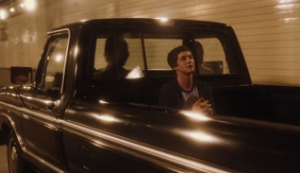
I see this idea a lot in The Perks of Being a Wallflower (2012). The main character, Charlie, learns about himself through the assistance of others – those being older than him who have experienced much more than he has. He watches others closely and tends to imitate their behaviour to fit in, or maybe to see if this is right for him, constantly trying to see where he fits in society. Many can relate to this as people often look at others as their role models and experiment with what feels right for them, in an attempt to develop their own individual self.
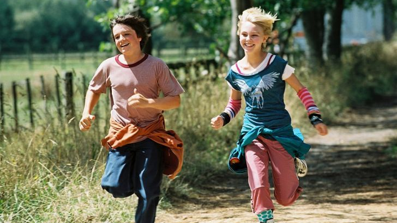
Bridge to Terabithia (2007) quite clearly underlines the significant role imagination plays within adolescents. This film merges the innocence that is carried along from childhood and the detrimental events that are brought to light by adulthood. It is beautiful and heartbreaking as it manages to encompass how fragile the teenage heart is and why allowing their minds and imaginations to run free is so important.

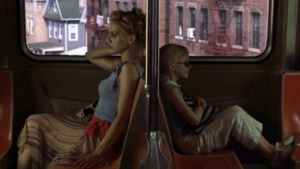
Then comes the challenge of finding yourself acting too mature or childish for your age, with wanting to, or perhaps being forced to, be on the opposite end. Uptown Girls (2003) explores how a young woman and an 8-year-old girl teach each other how the world works from their point of view, and how it shapes them as individuals. It acknowledges the difficulty in finding your way in life and how patient you have to be with others and with yourself in order to find inner peace. It is deep and complicated but amazingly detailed in expressing their inner emotions using various camera techniques rather than dialogue to portray this.
During my work experience with London Breeze Film Festival, I had the opportunity of viewing and rating submissions for their upcoming 11th edition of London Breeze in October 2026. As an aspiring filmmaker, I was thrilled to be able to see what young people in the film industry are capable of, and I was not disappointed. The creativity and dedication every one of these submitters put into their work was incredible and it was a privilege to be able to watch them.
This experience has taught me how much of a difference young filmmakers can make in the film industry and just how vital it is that their hard work is displayed for people to see. London Breeze makes this entirely possible as their aim is to showcase the new and diverse, the underrepresented and untold stories, which provides an opportunity for anyone and everyone to have their creations shown to a wider audience. London Breeze is inspiring adolescents to continue creating, letting their imaginations soar.
Sophia Gonzaga